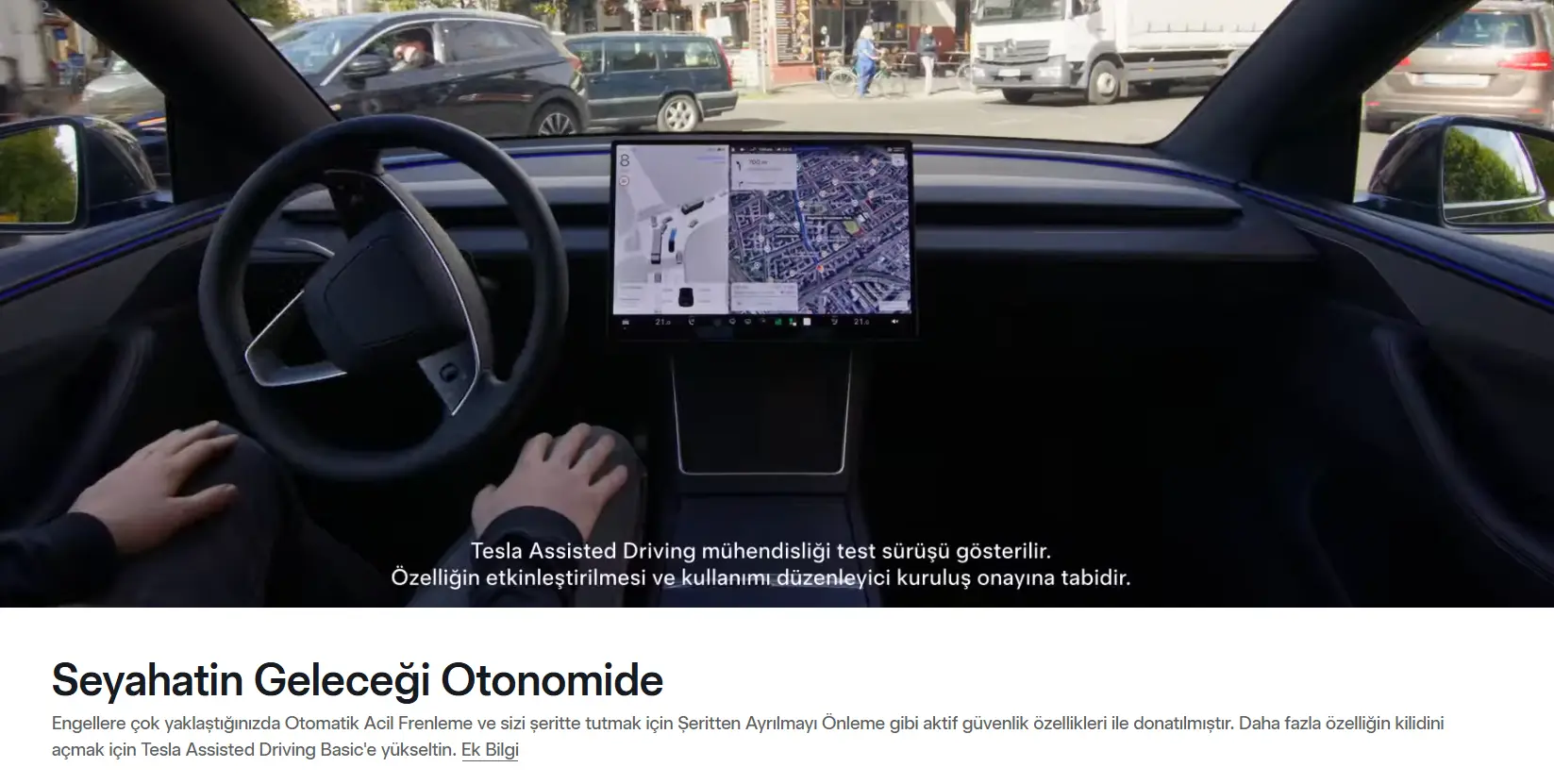
Tesla has quietly executed a major strategic shift in how it brands and markets its flagship driver-assistance software in Turkey and across the European continent. The premium software suite, which has long been known globally as "Full Self-Driving Capability" (FSD), has officially been rebranded on Tesla’s support and configuration portals in these regions. Moving forward, customers in Turkey and Europe will find the package listed under a new, more conservative name: "Tesla Assisted Driving Basic."
Meanwhile, in North American markets, including the United States and Canada, Tesla continues to use the original "Full Self-Driving" and "FSD (Supervised)" nomenclature. Despite the dramatic change in branding, Tesla has confirmed that the actual contents, features, and capabilities of the software package remain entirely unchanged. The update represents a purely linguistic and strategic adjustment rather than a functional downgrade of the vehicle’s onboard technology.
The sudden name change has sparked intense interest within the automotive and tech industries, as it highlights the growing divide between North American and European regulatory frameworks. It also signals Tesla’s preparation for a critical regulatory milestone in Europe expected later this year.
What Do Tesla’s Driving Support Systems Offer?
To understand the significance of this rebranding, it is essential to examine how Tesla structures its driver-assistance technologies. In Turkey and Europe, Tesla’s driver-assist offerings are divided into three distinct tiers, each offering a progressive level of automation and convenience:
The first tier is Basic Autopilot, which comes standard on all new Tesla vehicles. This foundational system includes Traffic-Aware Cruise Control and Autosteer, allowing the vehicle to steer, accelerate, and brake automatically within its clearly marked lane. It is designed primarily for highway driving and requires the driver’s active supervision at all times.
The second tier is Enhanced Autopilot, an optional upgrade that builds significantly upon the basic package. Enhanced Autopilot adds advanced highway features, including Navigate on Autopilot, which guides the car from a highway’s on-ramp to its off-ramp, taking over lane changes and highway interchanges. It also includes Auto Lane Change, Autopark, and the Summon and Smart Summon features, which allow the vehicle to be maneuvered remotely in parking lots using the Tesla mobile application.
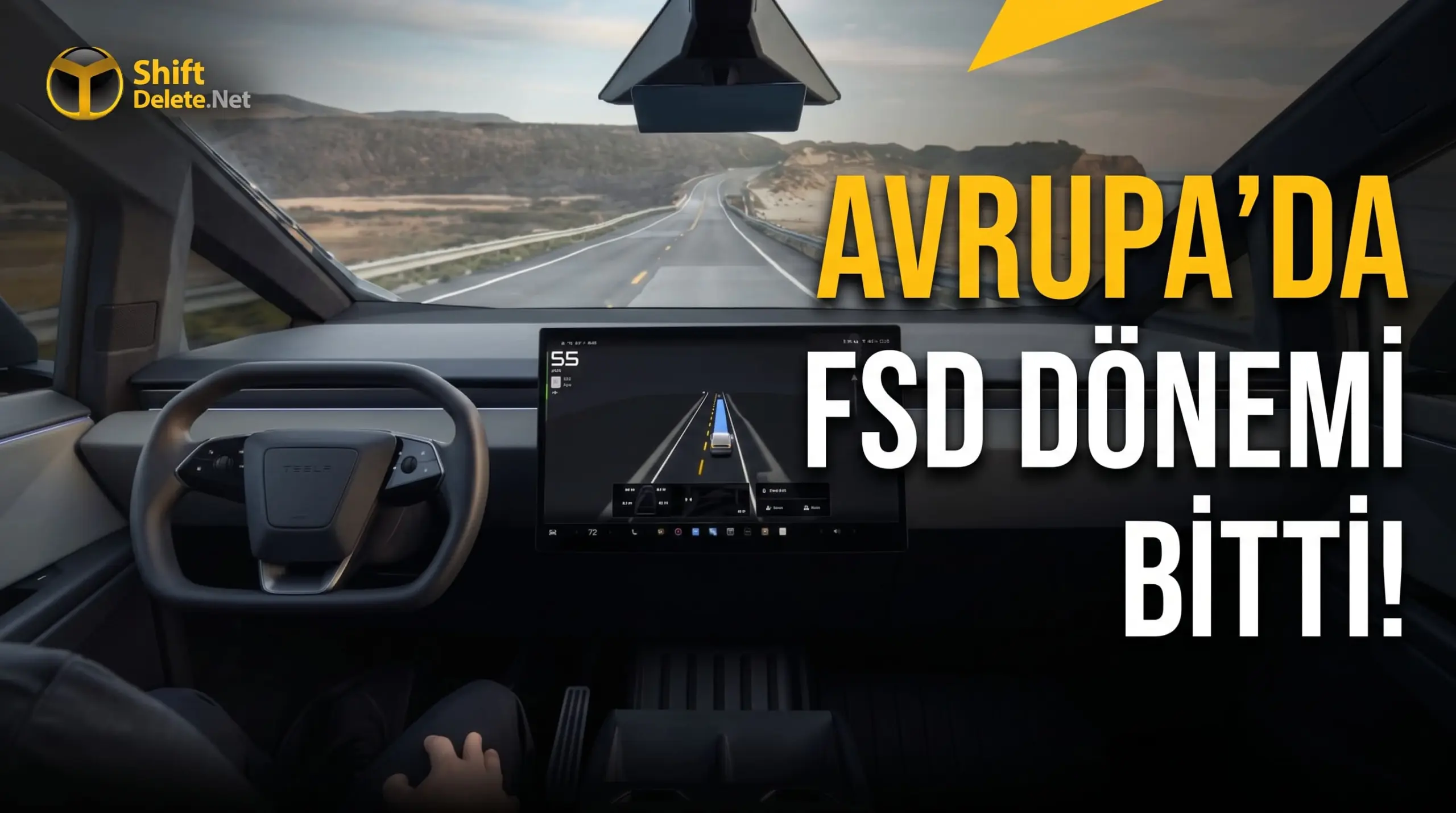
The third and highest tier is the newly renamed Tesla Assisted Driving Basic (formerly known as Full Self-Driving Capability). This premium package incorporates all the features of the standard and Enhanced Autopilot suites and adds Traffic Light and Stop Sign Control. This feature enables the vehicle to actively recognize traffic control devices and slow to a stop under the driver’s supervision. In the future, this tier is intended to support full automated steering on city streets, a feature that is currently highly restricted by European regulations.
Why Did Tesla Introduce This Name Change?
The decision to drop the "Full Self-Driving" moniker in Turkey and Europe is deeply rooted in the complex legal and regulatory landscape of the European Union. The rebranding coincides with a period in which Tesla is actively lobbying and working to secure official type-approval for its advanced FSD (Supervised) software across the EU.
For years, European regulators and safety advocates have expressed deep reservations about Tesla’s marketing terminology. The European market operates under strict consumer protection laws that forbid companies from using product names that could mislead consumers about a product’s actual capabilities. Because Tesla’s system is classified as a Level 2 semi-autonomous system under the SAE J3016 standard, the driver must remain fully engaged, keep their hands on the wheel, and maintain constant situational awareness.
By replacing "Full Self-Driving" with "Tesla Assisted Driving Basic," the automaker is taking a proactive step to align its marketing language with the strict definitions enforced by European authorities. The new name clearly communicates that the software is a driver-assist mechanism rather than a fully autonomous system. This move is designed to reduce friction with regulatory bodies, neutralizing potential legal challenges regarding misleading advertising while Tesla seeks broader approval for its software.
The EU Approval Process and the Current Status
The regulatory pathway for advanced driver-assistance systems (ADAS) in Europe is governed by strict international standards, primarily set by the United Nations Economic Commission for Europe (UNECE). Historically, these regulations have placed strict limits on how much steering torque an automated system can apply and how quickly a vehicle can initiate automated lane changes. These restrictions have prevented European Tesla owners from experiencing the same level of fluid, end-to-end automated driving that US owners enjoy.
However, the regulatory landscape is shifting. UNECE has been developing a new framework known as Driver Control Assistance Systems (DCAS) regulations. This new set of rules is designed to accommodate modern, AI-driven driver-assist technologies that can handle more complex driving tasks, such as navigating roundabouts, handling intersections, and managing urban traffic, provided the driver remains attentive.
Tesla has been working closely with European authorities to demonstrate that its FSD (Supervised) software meets these emerging safety standards. The automotive industry is focused on December, which is anticipated to be a milestone month. European regulatory bodies are expected to release updated decisions and guidelines regarding the implementation of DCAS.
If the EU issues a favorable decision, it could open the floodgates for Tesla to legally deploy its advanced neural-network-based driving features to European customers. The rebranding of the software to "Assisted Driving Basic" appears to be a calculated preparatory move to ensure that when the software is finally approved, its name is already fully compliant with the EU’s strict marketing guidelines.
What Does This Mean for Turkey?
Because of Turkey’s unique position and its close trade ties with the European Union, this development has direct and immediate implications for Turkish Tesla owners and prospective buyers.
Turkey’s Ministry of Industry and Technology harmonizes its automotive type-approval regulations directly with the European Union and the UN-ECE frameworks. Under this harmonization policy, any vehicle, software update, or safety standard approved for the European market is adopted under the same technical parameters in Turkey. Consequently, Turkish consumers receive the exact same vehicle configurations, software limitations, and feature sets as their European counterparts.
With the update now live on Tesla’s Turkish support pages, local consumers will see "Tesla Assisted Driving Basic" in their vehicle documentation, menus, and purchase agreements.
More importantly, the timeline for when Turkish drivers will receive advanced city-street driving features remains tied to Brussels. Once European regulatory bodies grant type approval for Tesla’s advanced supervised driving features under the upcoming DCAS rules, those capabilities will automatically become legally deployable on Turkish roads as well. Until then, Turkish drivers will continue to use the system within the existing legal boundaries of a Level 2 driver-assist system.
Evaluation: A Shift Toward More Honest Naming
Tesla’s use of terms like "Autopilot" and "Full Self-Driving" has been a point of contention in the automotive industry for nearly a decade. While these names have served as powerful marketing tools that helped establish Tesla as a leader in automotive innovation, they have also drawn fierce criticism from safety organizations such as Euro NCAP, consumer advocacy groups, and government agencies worldwide.
Critics have long argued that these names create a dangerous "automation bias," leading drivers to overestimate their vehicle’s capabilities. In some cases, this has resulted in drivers engaging in distracted behavior, believing the car can completely drive itself.
From a safety and consumer advocacy standpoint, the transition to "Tesla Assisted Driving Basic" is a positive and pragmatic step. The new name is far more honest and transparent. It explicitly frames the technology as an assistant to the driver, eliminating any ambiguity about who is ultimately responsible for the vehicle’s safe operation. It reinforces the fact that, despite the advanced neural networks running in the background, the human driver remains the primary operator.
However, this rebranding also highlights the stark regulatory divergence between the United States and Europe. While US regulators have allowed Tesla to test and iterate its "Full Self-Driving" software on public roads with relatively flexible oversight, European regulators demand rigorous, pre-market validation and strict adherence to standardized terminology.
For consumers in Turkey and Europe, the ultimate test of this transition will not be the name displayed on the screen, but how the system performs in the real world. The upcoming regulatory decisions in December will determine whether "Assisted Driving Basic" can deliver the same advanced, seamless driving experience currently seen on American roads, or if European drivers will continue to operate a more restricted version of Tesla’s vision for the future of transportation.