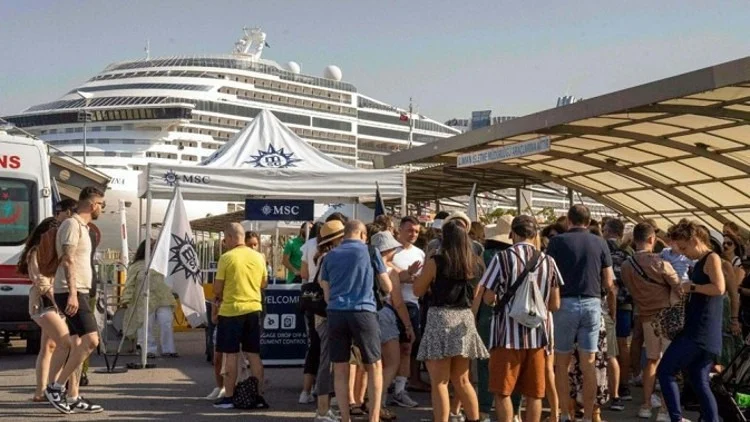
İZMİR — Maritime tourism across the western Turkish province of İzmir experienced a significant boost during the first seven months of the year, with local port facilities welcoming a total of 90,907 cruise ship passengers between January and July. The figure represents a noticeable year-over-year expansion in sea travel to the region, underscoring a sustained recovery and growing interest in Aegean cruise itineraries.
According to operational data reported by the Demirören News Agency (DHA), the influx of international cruise travelers was distributed across three primary maritime terminals in the province: Alsancak Port in central İzmir, Çeşme Port on the western tip of the peninsula, and Dikili Port along the northern coastline.
The performance recorded during the seven-month period marks a clear increase compared to the corresponding period of the previous year, when the same three ports registered a combined total of 77,133 cruise travelers. The growth of nearly 14,000 additional visitors demonstrates momentum in regional maritime arrivals and highlights İzmir’s strategy of leveraging multiple port access points to capture different segments of the cruise shipping market.
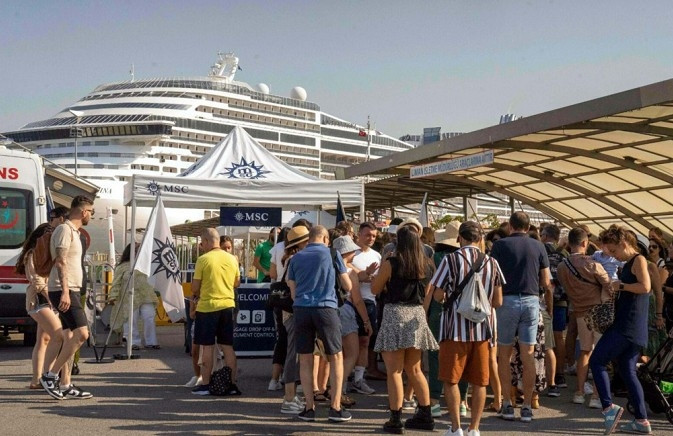
The upward trajectory in passenger numbers reflects broader shifts in Eastern Mediterranean maritime travel. As international cruise lines continue to restore and expand their routes across the Aegean Sea, Western Anatolia has emerged as an essential stopover. The presence of three distinct port facilities within İzmir Province allows the region to accommodate a wide variety of vessel types, ranging from large multi-deck passenger liners docking near the urban core to boutique luxury ships and short-haul vessels landing at coastal resort towns and historic gateways.
Highest Growth Recorded at Central Alsancak Port
The most significant increase in maritime traffic during the January-to-July window occurred at Alsancak Port, situated within the metropolitan center of İzmir. Over the course of the seven-month period, Alsancak Port recorded 35 cruise ship arrivals. This represents a solid rise from the 28 cruise ships that docked at the urban terminal during the exact same period in the previous year.
The increase of seven ship calls at Alsancak Port illustrates renewed commitment from international cruise operators toward İzmir’s primary city center terminal. Alsancak Port possesses the deep-water berthing capacity and large-scale passenger infrastructure required to handle modern, high-capacity cruise liners carrying thousands of passengers simultaneously. Located in close proximity to major metropolitan landmarks—such as the historic Konak district, the seaside Kordon promenade, and the centuries-old Kemeraltı Bazaar—the port provides disembarking visitors with immediate access to the cultural, historical, and commercial heart of the city.
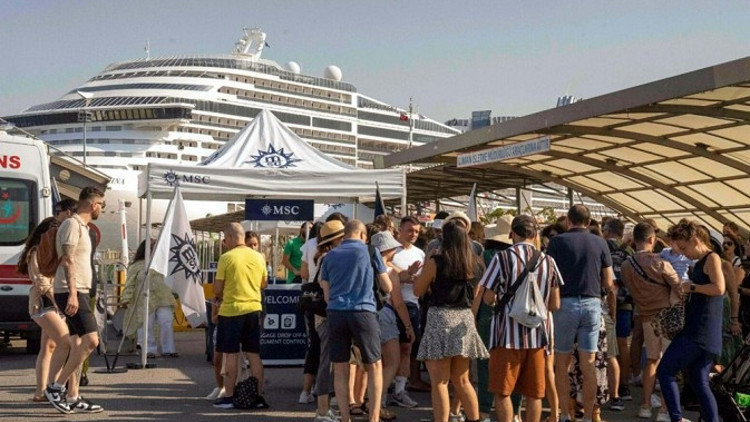
The rise in ship arrivals at Alsancak Port carries direct economic implications for central urban merchants. When major passenger vessels berth at the port, thousands of international tourists enter the city center, generating increased foot traffic for local businesses, traditional market vendors, historical sites, transportation providers, and culinary establishments. The positive growth trajectory from 28 to 35 ship calls highlights how central İzmir is consolidating its position on standard Eastern Mediterranean cruise routes.
While Alsancak Port achieved the highest growth rate in vessel arrivals, Çeşme Port secured the highest total number of cruise ship calls among the three regional maritime gateways. Situated on the far western end of the İzmir peninsula, Çeşme Port hosted 39 cruise ships during the first seven months of the year.
Çeşme’s high volume of ship arrivals underscores its standing as a premier resort and coastal destination in the Aegean basin. Owing to its geographic proximity to several Greek Aegean islands, Çeşme serves as a vital port of call for cruise lines running island-hopping and regional Mediterranean routes. The port primarily accommodates medium-sized, boutique, and luxury cruise vessels whose passengers seek coastal relaxation, historic architecture, and high-end marina amenities. Hosting 39 vessel calls in seven months reinforces Çeşme’s strategic role in attracting lifestyle-focused and high-spending maritime travelers to the province.

Further north along the Aegean coast, Dikili Port hosted 10 cruise ships during the same seven-month period. Although smaller in overall volume compared to its urban and western counterparts, Dikili fulfills a distinct and specialized purpose within İzmir’s broader maritime infrastructure.
Located in northern İzmir Province, Dikili operates as an essential maritime entrance for travelers intending to visit famous archaeological and historical locations in the surrounding countryside. Most notably, the port serves as the primary disembarkation point for organized shore excursions to the UNESCO World Heritage site of Pergamon (Bergama). Cruise operators berthing at Dikili typically focus on cultural, historical, and educational travel itineraries. By hosting 10 cruise ships in the first seven months of the year, Dikili provides specialized cruise liners with direct access to Northern Aegean historical assets without requiring long overland bus journeys from central İzmir.
The combined operational performance of Alsancak, Çeşme, and Dikili illustrates the structural advantage of İzmir Province’s multi-port layout. Rather than relying on a single entry point, the provincial maritime ecosystem offers three distinct choices tailored to different vessel sizes and passenger preferences. Large ocean liners docking at Alsancak feed directly into urban retail and cultural networks; boutique and luxury vessels berthing at Çeşme connect visitors to seaside leisure and island routes; and heritage-focused ships landing at Dikili offer seamless connections to ancient archaeological sites.

The increase from 77,133 to 90,907 passengers across the three terminals underscores the broader economic value of cruise tourism to Western Anatolia. Cruise travelers represent an important visitor demographic, contributing directly to local transportation networks, professional tour guide services, regional museums, artisanal craft shops, and regional dining establishments. Disembarking groups often utilize organized bus fleets and private shuttles to visit surrounding towns and historical landmarks, ensuring that the economic impact of cruise arrivals spreads beyond the immediate port facilities into the wider regional economy.
The continuous operations across the three ports through the first seven months of the year also highlight the complex logistics behind managing regional cruise traffic. Successfully handling over 90,000 maritime passengers across 84 total ship arrivals requires coordinated effort among port management authorities, customs and border control agencies, municipal transport operators, and tourism service providers.
With 35 ships calling at Alsancak, 39 at Çeşme, and 10 at Dikili between January and July, the regional cruise sector has established a solid operational foundation for the remainder of the year. The early-year figures confirm that Western Türkiye’s Aegean ports remain highly attractive stops for international cruise lines navigating the Eastern Mediterranean.